Monday, 21 November 2016

Planning: Shot List

SCENE 1

musical intro:(10sec)
1•Longshot- [artist sitting outside house (the walk out of your front door straight onto the street type) head in hands: frustrated. His clothes falling from above- this could be slow motion for better effect?](-*record 1x version where artist is still to allow slow motion to look better?)
-dolly moves forward-stops at a close up of his face-
2•(20SEC)Closeup of artists face for first line to be lip synched: "who says that I..." Artist looking straight into the camera) "...last one i'd ever get"
3•cut to midshot "i thought we had something worth forever.." Artist still keeps eye connection with the camera - starts roughly packing a few items into a backpack which has also fallen alongside the clothes

Starts getting up on "cause im stuck smoking on the rest of together" -to capture him getting up the camera will most likely have to move slightly backwards on the dolly again

Tracking shot-artist moving forward-"ive been getting high just to get by (dolly positioning changed tracks ____ horizontal rather than || vertical- camera swivelled on its axis to face artist)
"Ever since you left wrong turned right for me [artist questioning himself] now I can see tomorrow chilling across the street"

Cut to graffiti-bg-brayton mid shot "sometimes youve gotta"

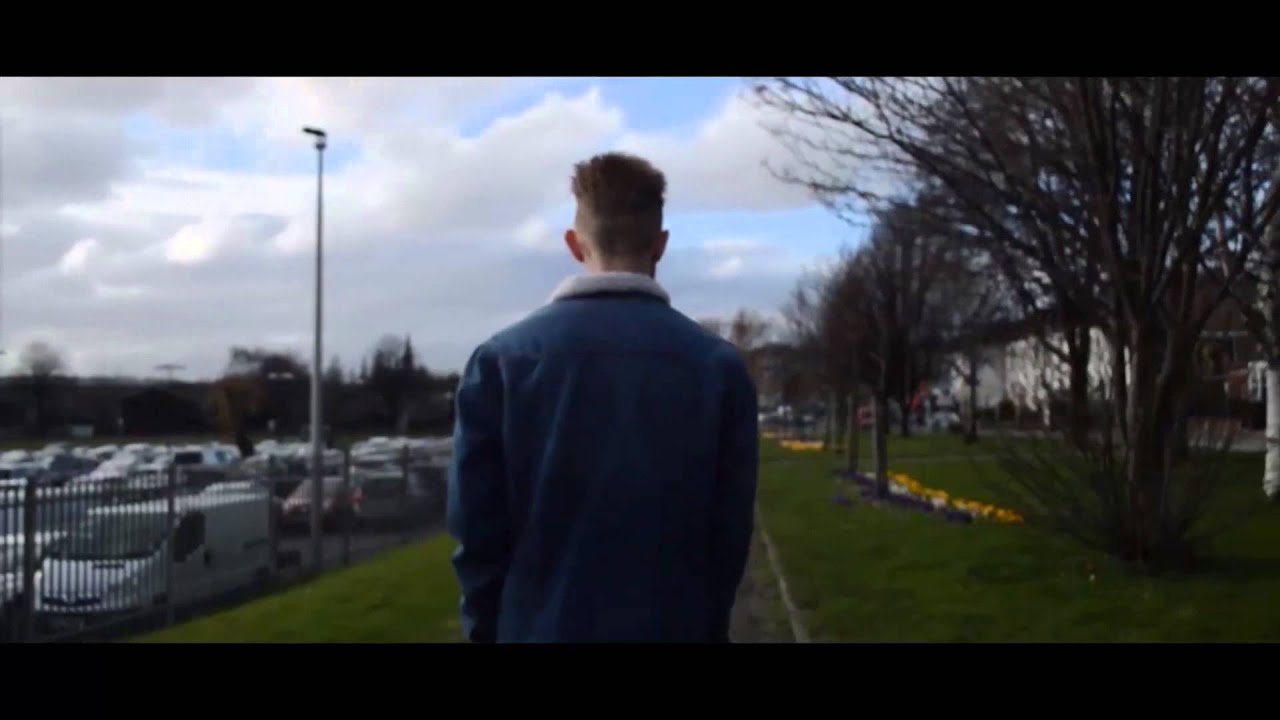
Cut back to narrative-brayton--> from the back - we see him drop his bag (because he's all 'screw it') "JAYWALK"
**Alternatively he could've just clumped the clothes together and held them and now hes let go of all of them???which one??

For chorus shots of Brayton on SHOREDITCH graffiti background more art rather than spray letters

---SCENE 2

Cut to narrative-Brayton

tracking shot of Artist walking forward in location 2"It took me six whole months " {not lip synched} - he's starting to doubt himself as he sees other couples-
"Worth of blunts To get the taste of you.." Camera follows a couple walking towards the artist from a P.O.V shot - turns in one swift movement to Brayton (couple can be seen in the bg walking away) {itll be best if the actor is lip synching during this part so he's ready for when the camera meets him - should be at around "the taste of you off my tongue

"And it was hard to" Cut to Narrative-Brayton entering bar-pushing door- camera inside

maybe camera sweeps bar/ lingers on something in the settings of the bar
"Let go of my first love"= cut to mid shot narrative-Brayton sitting at bar
Close-up of him fiddling with his drink "im sorry if my pride and I" close up- puffs out air "were latched on too tightly"
"To what we were but you sent me flying"- shot of glass being slid away across the bar
"Tripping when you kicked me to the curb" shot of door from inside (light:dusk outside)

"Now ive been getting high just to get by"
"Ever since you left wrong turned right for me"
⁃ Shots of chorus-brayton for the 2nd chorus


Location:southbank pink lights
"Two steps forward and one step back"
"your still moving forward so dont look back"
"If you take two steps forward and one step back"
"You're still moving forward

Southbank skatepark:
(Greeted by mates-they pat him on the back-smiling-laughing)
"so you better not look back"
"You better Jaywalk"
--> LAST LONG CHORUS loops x2
Shots include:
-Brayton on southbank graffiti background lip synching
-lads skateboarding
-group shot:{laughing}

Saturday, 19 November 2016

Planning: Mood Board


I believe that there should be a lot of colour in the video which I tried to make explicit in my mood-board, the reason for this being that pop music videos often exploit colour to draw audiences in.

Sunday, 6 November 2016

TECHNICAL POST: CAMERA SHOTS / COMPOSITION


What: Pan

How: Move the camera horizontally left or right, using a tripod for a smooth effect. 
Why: To follow a subject or show the distance between two objects. Pan shots also work great for panoramic views such as a shot from a mountaintop to the valley below.
Rule: Always start on a still shot, begin the tilt, and finish on a still shot. Practice first. Look at the scene as the tilt reaches the middle portion between top and bottom of the tilt.


What: Tilt

How: Moving the camera up or down without raising its position.
Why: Like panning, to follow a subject or to show the top and bottom of a stationary object. With a tilt, you can also show how high something is. For example, a slow tilt up a Giant Sequoia tree shows its grandness and enormity.
Rule: Always start on a still shot, begin the tilt, and finish on a still shot. Practice first. Look at the scene as the tilt reaches the middle portion between top and bottom of the tilt.

Image result for tilt cameraImage result for tilt camera


What: Dolly

How: The camera is set on tracks or wheels and moved towards or back from a subject. A dolly is also a noun, describing a train track contraption used for a dolly (verb) shot or a device attached to a tripod. .
Why:To follow an object smoothly to get a unique perspective. In some movies directors combine the dolly and a zoom shot for a real sense of doom.To do this, the camera lens zooms into the subject at the same time as the camera physically dollies out, and the person in the shot remains the same size, but the background appears to move.

Image result for dolly camera movementImage result for dolly camera movement

What: Crane 

How: This works and looks similar to a construction crane. It is used for high sweeping shots or to follow the action of your subject.
Why: Gives a bird's eye view. It looks as if the camera is swooping down from above. Movie directors use this for street scenes so they can shoot from above the crowd and the traffic, and then move down to eye level.
Image result for crane shotImage result for aerial shot

What: Handheld

How: You hold the camera without a tripod, monopod or ant other device. This balances the camera and keeps shaking to a minimum. Because of their size, most consumer cameras can't rest on your shoulder.
Documentaries use hand-held shooting techniques. In horror or action movies they often use hand held shots when something bad is about to happen.
Rule: When shooting handheld, do not zoom in! The more you zoom in, the shakier the shot gets. It is better to move closer to your subject and shoot with as wide of a setting as you can. Handheld is best when you are shooting someone or something that is moving. It looks very bad when shooting landscapes, buildings, or stationary objects.
Image result for handheld shotImage result for handheld shot

What: Zoom

The 9 Classic Camera Moves
How:You press a lever or rocker to zoom in or out. This lever controls the lens mechanism inside the camera. Usually, the harder you press on the lever the quicker the zoom. Some camcorders have only one zoom speed whereas others allow you to zoom manually by turning a ring on the lens. A zoom lens gives you the option of having both telephoto and wide angle shots in one camera. You use the telephoto lens when you zoom in, bringing objects closer to you. There is less visible area around your subject, and distant objects are compressed. Zooming the lens out gives you the wide-angle shot and more of your subject and surrounding areas are visible. 
Why: To bring objects at a distance closer to the lens, or to show size and perspective.
Rule: Continuous zooming in and out is annoying to viewers. Start on a still shot, then zoom smoothly, and end your zoom on a still shot. Practice first. Look at the scene as the zoom reaches the middle portion between the closeup and wide angle. 

TECHNICAL POST: RULE OF THIRDS

Rule of thirds

The rule of thirds is a concept in video and film production in which the frame is divided into nine imaginary sections, as illustrated in the photo below. This creates reference points which acts as guides for framing the image. Points of interest should occur at 1/3 or 2/3 of the way up (or across) the frame, rather than in the center. 


Close up

In this example, the  positioning is in the middle of the shot. Her facial features are on the center of the grid.  It violates the rule of thirds in every possible way, but since her face is so full of expression and mood, it feels like putting it in the center creates more drama.


Image result for rule of thirds portrait


We did this to see how effective it was, and what meaning it caused. It also allows us to see how breaking the rule of thirds can be used to our advantage. In this picture, this is creates a more convincing rule of thirds and also conforms to the idea, and also creates a better portrait of the person, allowing them to look better. 


Image result for rule of thirds portrait


Landscape
In the same way we used rule of thirds in the landscape shots to create a similar effect.
This is used to create a calm and peaceful nature shot. This can be done to make the location seem safe and natural.
IN THIS PHOTO, YOU CAN SEE THAT THE MILL WAS PLACED ON THE INTERSECTION OF THE THIRDS LINES SO THAT THE PHOTO FEELS MORE BALANCED AND INTERESTING. I COULD HAVE PLACED IT AT ANY OF THE INTERSECTIONS OF THE THIRDS LINES, BUT THIS ONE SEEMED TO MAKE THE MOST SENSE TO ME.


In this photo, you can see that the mill was placed on the intersection of the thirds lines so that the photo feels more balanced and interesting. I could have placed it at any of the intersections of the thirds lines, but this one seemed to make the most sense to me.


In contrast, this photo breaks the rule of thirds. This can be used to make a location uneasy, unnerving and untrusting. It could be used effectively in a horror or thriller, because it does not follow the rule of thirds, which creates an unnatural bond with the audience.


TECHNICAL POST: 3 POINT LIGHTING


We studied 3 point lighting in order to gain a better understanding of how we could implement lighting to manipulate the room where we're planning to film the band scenes in our music video: to enhance the image, create realism, and create an atmosphere. We most likely use artificial lighting if we are filming in areas that lack natural light so that characters can be visible. However, we do not feel that this lighting looks very natural, and may deduct the element of realism in certain shots.


Example of 3 point lighting set up


TECHNICAL POST: GREEN SCREEN


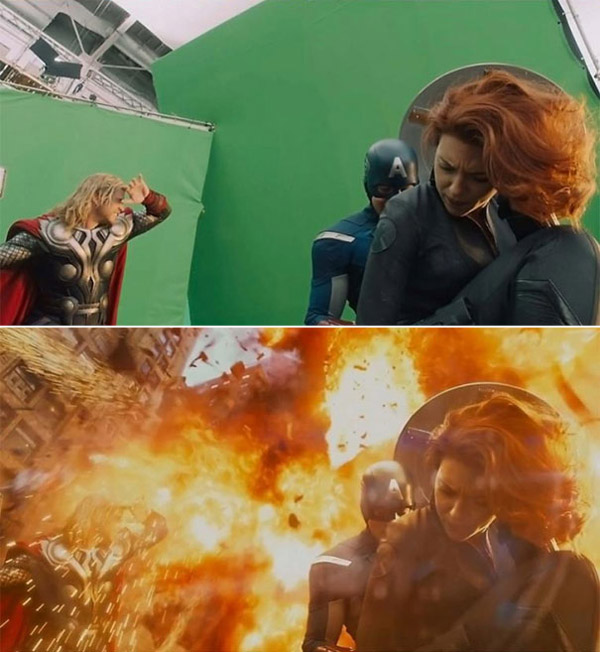
Green/blue screens are based on the idea of chroma-keying. The idea is that a specific color is chosen and replaced by a different color/background.

Blue screens are used in place of green screens because it's generally easier to chroma-key. The color is softer than in a green screen. However, green screens are still more commonly used because of multiple reasons. One of them being the fact that some people like to wear blue clothing. Green screens are also more commonly used because of the color green being the highest luminescence of all the color channels (RGB). Green screens are very bright, but because of the high luminescence, there is also a high level of light reflection from a green screen, resulting in "green spill". 

Green spill is when there is so much light reflection that some color reflects onto your subject as well. Green spill is very problematic, and is usually best fixed before shooting by watching your lighting, and chroma-key background.

Before and after


TECHNICAL POSTS: CAMERA DOLLY

CAMERA DOLLY


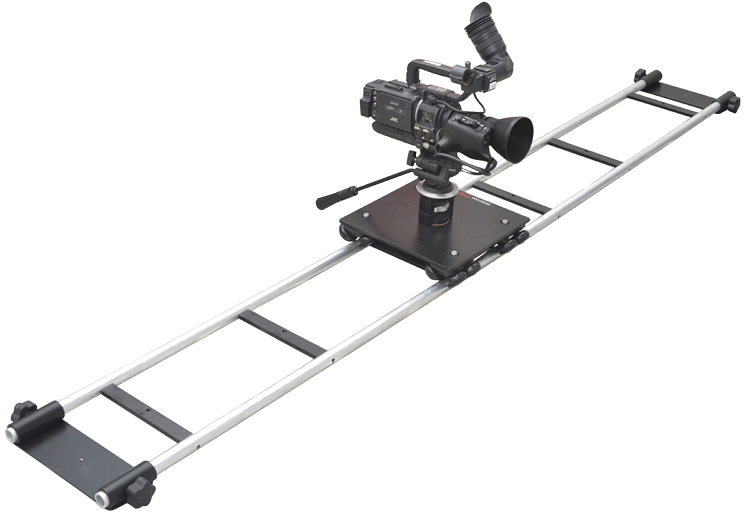
The camera dolly may be used as a shooting platform on any surface but is often raised onto a track, to create smooth movement on a horizontal axis known as a tracking shot. Additionally, most professional film studio dollies have a hydraulic jib arm that raises or lowers the camera on the vertical axis.


The camera dolly in action


The dolly zoom used in 'The Lord Of The Rings'